
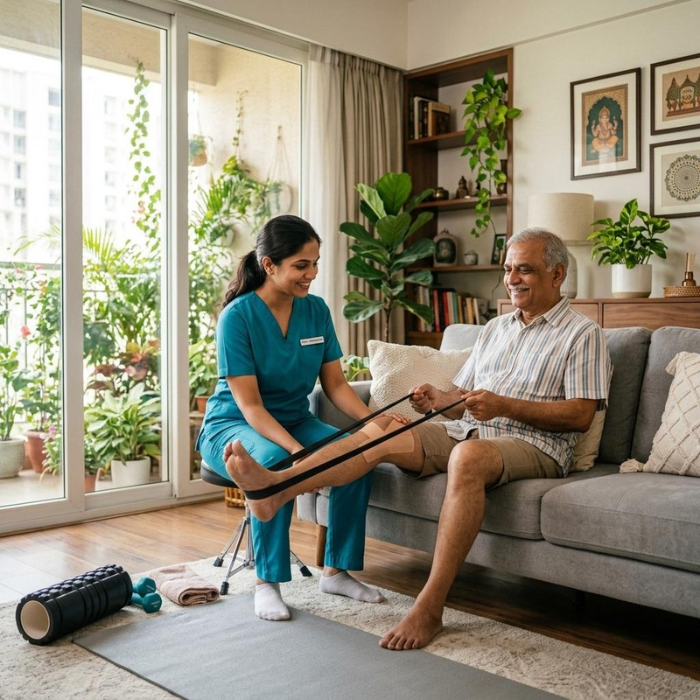
Physiotherapy for Senior Citizens at Home: Benefits, Exercises and Mobility Support
Growing older often brings changes in physical strength, flexibility and balance. Activities that once felt effortless, such as walking, climbing stairs, getting out of bed or standing for a few minutes, may gradually become difficult. For senior citizens, these changes can affect everyday independence and make simple household activities more challenging. Lack of physical activity, joint stiffness, muscle weakness and certain medical conditions can further affect mobility. This is why physiotherapy plays an important role in maintaining physical health and supporting healthy ageing. For families searching for physiotherapy for senior citizens in Kolkata, home-based sessions can be a convenient option. They allow elderly individuals to receive professional guidance in a familiar environment while working towards better movement, strength and balance. Why Do Senior Citizens Need Physiotherapy? Ageing affects different parts of the body, including muscles, joints and bones. Some seniors experience knee pain, back discomfort, reduced flexibility or difficulty maintaining balance. Others may need rehabilitation after surgery, a stroke, a fracture or a prolonged illness. Physiotherapy focuses on improving physical function through suitable exercises, movement training and other therapeutic techniques. A qualified physiotherapist first assesses the individual’s condition and then develops a programme according to their abilities and recovery goals. Regular physiotherapy may help seniors: Maintain muscle strength and joint flexibility. Improve walking ability and body coordination. Manage certain types of joint and muscle discomfort. Develop better balance and movement control. Recover physical function after illness or surgery. Perform everyday activities with greater confidence. The objective is not necessarily to restore the physical abilities of younger years. It is to help older adults maintain as much independence and comfort as possible. Benefits of Physiotherapy for Senior Citizens at Home Travelling to a clinic can be tiring for elderly individuals, especially those who have difficulty walking or require assistance while travelling. Home-based physiotherapy offers an alternative that allows treatment and exercise sessions to take place in familiar surroundings. Here are some important benefits. 1. Improved Mobility and Flexibility Joint stiffness and reduced flexibility can make movements uncomfortable. Physiotherapy includes appropriate stretching and mobility exercises that help maintain the movement of joints. With regular practice under professional guidance, seniors may find everyday activities such as standing, walking and changing positions easier. 2. Better Balance and Fall Prevention Falls are a major concern among older adults. Reduced muscle strength, poor coordination and balance difficulties can increase the risk of accidents. Physiotherapists use individualised balance and functional exercises to improve stability. They may also assess walking patterns and suggest suitable walking aids when necessary. 3. Support for Joint and Muscle Discomfort Conditions such as osteoarthritis can cause stiffness and discomfort in the knees, hips and other joints. Avoiding all movement may further reduce muscle strength and physical function. A physiotherapist can recommend suitable exercises to maintain joint movement and strengthen the surrounding muscles. The programme should always be adjusted according to the patient’s condition and pain levels. 4. Rehabilitation After Surgery or Illness Some seniors need additional physical support after knee replacement, hip surgery, a stroke or a long hospital stay. Physiotherapy helps them gradually work towards improving movement, strength and functional ability. The exercises and recovery timeline depend on the medical condition, surgical instructions and the individual’s response to treatment. 5. Greater Independence in Daily Activities Being able to walk to the bathroom, get out of a chair or dress independently can make a significant difference to an older person’s confidence. Physiotherapy often includes functional training that focuses on these everyday movements. Over time, suitable exercises may help seniors manage more activities without depending entirely on family members. Common Physiotherapy Exercises for Senior Citizens The right exercises depend on age, medical history, mobility and physical fitness. A qualified physiotherapist should assess the individual before recommending an exercise routine. The following are examples of gentle movements that may be included in a senior rehabilitation programme when appropriate. 1. Ankle Rotations Ankle movements help maintain flexibility and joint mobility. How it works: While sitting comfortably, gently rotate one ankle in a circular motion. Repeat in the opposite direction and then change feet. 2. Seated Knee Extensions This exercise focuses on the muscles around the thighs and helps maintain knee movement. How it works: Sit on a stable chair with both feet on the floor. Slowly straighten one knee, hold briefly if comfortable and lower the foot. Repeat with the other leg. 3. Seated Marching Seated marching involves lifting the knees alternately while remaining seated. How it works: Sit upright on a stable chair and slowly lift one knee, followed by the other. Maintain a comfortable pace without leaning backwards. 4. Sit-to-Stand Exercise This functional movement helps strengthen the muscles needed for standing up and sitting down. How it works: Sit on a stable chair with feet placed firmly on the floor. Lean forward slightly and stand up slowly, using arm support if needed. Return to the seated position with control. 5. Gentle Walking Walking can help maintain endurance, mobility and general physical activity. How it works: Begin with a short walk on a flat, clear surface with supervision if required. The duration and pace should depend on the person’s physical ability. These exercises should not be treated as a universal routine. Seniors with recent surgery, severe joint pain, a history of falls or heart-related conditions may require specific precautions or alternative movements. When Should Families Consider Home Physiotherapy? Family members may notice gradual changes in an elderly person’s movement before the individual asks for help. Recognising these signs early can make it easier to arrange a suitable assessment. Consider consulting a physiotherapist if your loved one: Has difficulty walking or standing for long periods. Experiences frequent joint stiffness or reduced flexibility. Needs support while getting out of bed or a chair. Has difficulty maintaining balance. Is recovering from surgery, injury or a stroke. Has experienced a decline in physical strength after hospitalisation. Avoids everyday activities because of movement-related difficulties. A professional assessment can help identify the underlying limitations and determine which exercises or rehabilitation